An STP is the most expensive asset in a community and the one residents notice only when it fails. Recovery from a neglected plant costs many times what running it properly costs. We operate sewage and water treatment plants with trained operators, a daily parameter log and a preventive schedule that keeps the plant inside its design envelope.
Most community plants do not fail suddenly. They drift — aeration falls off, sludge is not wasted on schedule, dosing is done by eye, a blower runs hot for weeks — and then a monsoon week of peak load turns the drift into an odour complaint, a backed-up line or a discharge the community cannot use for flushing or landscape. Our operations are built to catch drift early: every shift records flow, pH, dissolved oxygen, MLSS, sludge levels and equipment condition, and readings that move outside range trigger a corrective action while it is still routine.
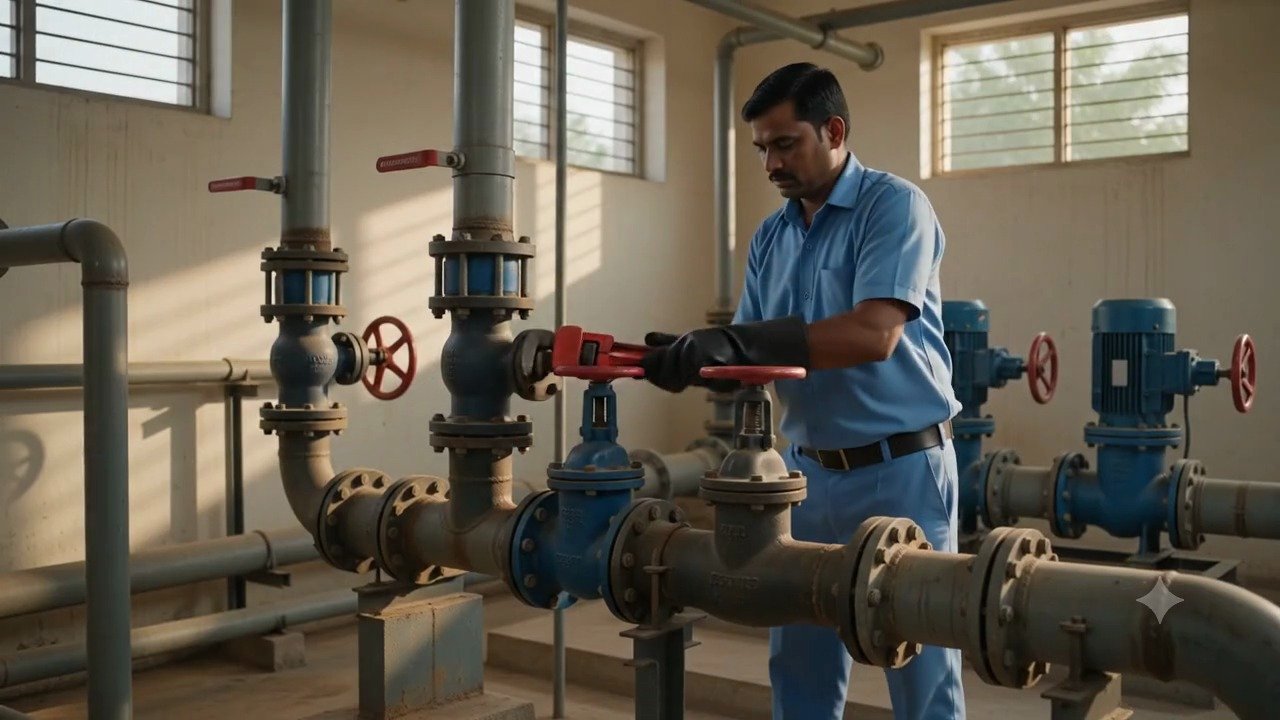
Operators are the difference. A plant run by whoever is available produces exactly the outcome you would expect. We deploy operators trained on the specific plant technology in use — conventional activated sludge, SBR, MBBR or MBR — because the control philosophy, the wasting regime and the failure modes differ meaningfully between them. Where a community has a water treatment plant or softener alongside, the same team covers media condition, backwash cycles, dosing and regeneration.
Operators are the difference.
Preventive maintenance runs on a calendar, not on breakdown. Blowers, pumps, diffusers, dosing systems, valves and panels each have a defined attention interval, and consumables are anticipated rather than discovered missing. Standby equipment is rotated so the standby is genuinely available, which is the single most common false assumption in community plants. Where the plant is under-designed for current occupancy or was commissioned and never balanced, we say so in writing and set out the options rather than quietly absorbing it into daily firefighting.
Records are kept in a form that survives scrutiny. Daily logs, maintenance history, consumable consumption and third-party test results are maintained so the association has something to produce when a pollution control board inspection, a builder handover audit or a residents' query arrives. Statutory consent and compliance obligations rest with the community as the owner; our role is to run the plant to specification and keep the evidence in order.
How we run it
- 01
Plant audit
Condition, technology, design capacity against current occupancy, and a written list of what is already wrong.
- 02
Baseline and range
Operating parameters and acceptable ranges are fixed so drift becomes visible instead of gradual.
- 03
Shift logging
Every shift records readings and equipment condition; out-of-range values trigger corrective action.
- 04
Preventive calendar
Equipment attention runs to schedule, with consumables planned ahead of need.