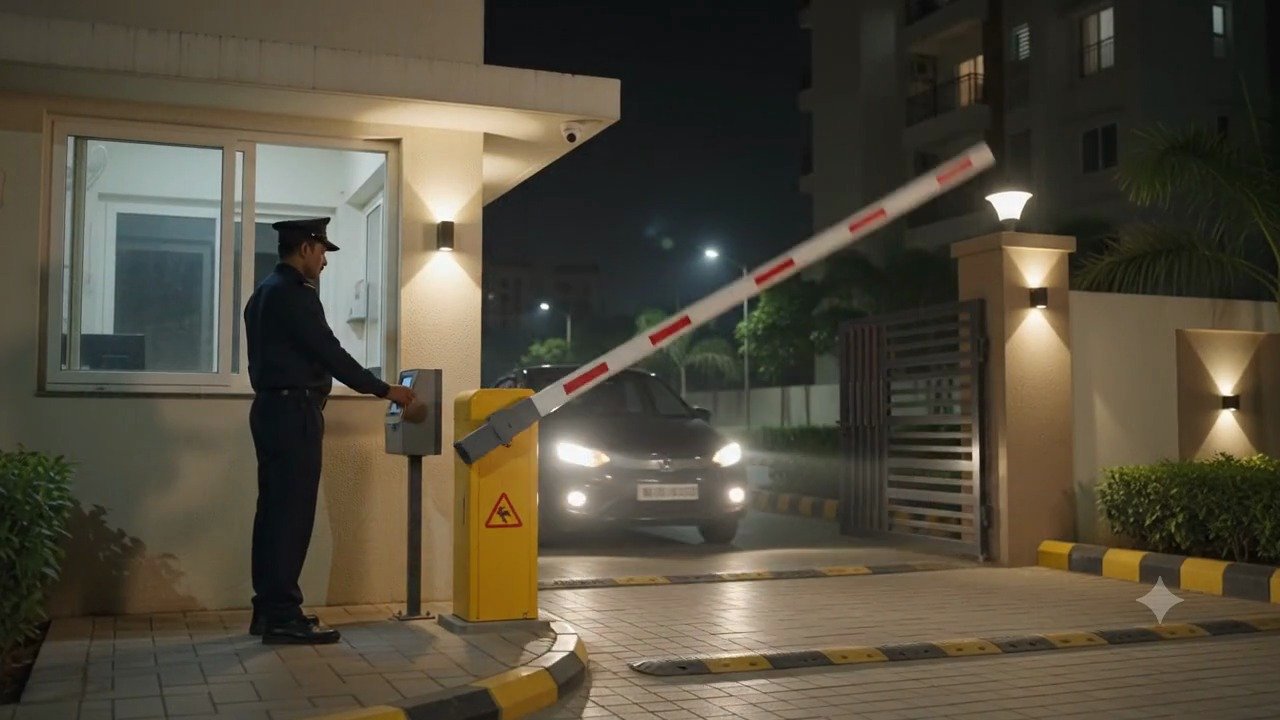
Security is the service where paperwork and practice diverge fastest. A gate can be manned and still be open in every way that matters. We staff it with verified, trained personnel and run it on a routine that can be checked: logged handovers, timed patrols and visitor control that is actually enforced at 11pm, not only at 11am.
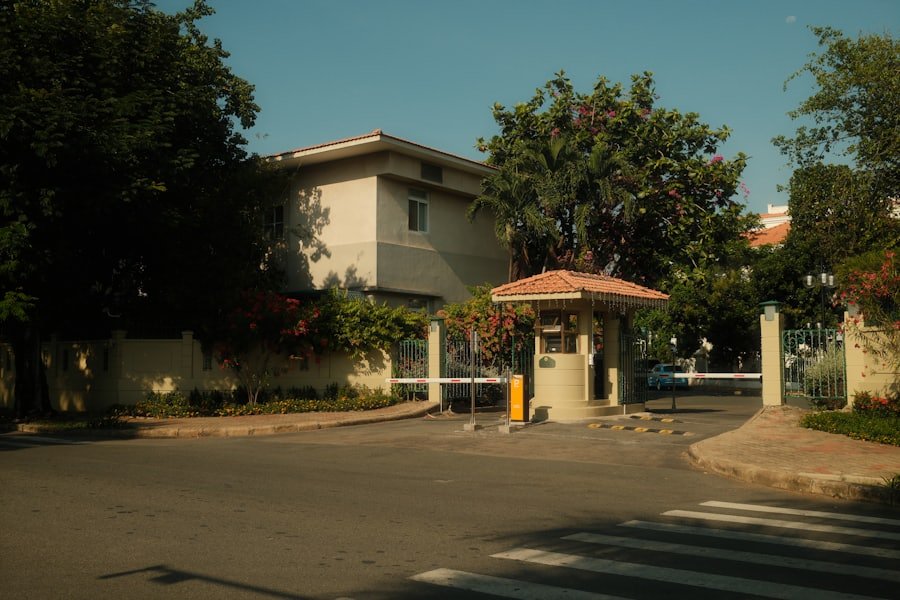
Deployment starts with the gate, but it does not end there. A typical community needs main-gate control, visitor and vehicle verification, basement and perimeter patrol, amenity supervision at peak hours and a night routine that covers the hours when nothing is supposed to be happening. We build the deployment around the community's actual geometry — number of entries, basement levels, blind corners, service gate usage — rather than applying a fixed guard-to-flat ratio.
Personnel are background-verified before deployment and trained on the specifics of the site: emergency numbers, assembly points, fire panel location, lift rescue procedure, and the escalation ladder for a dispute at the gate. Training is not a one-time induction. Refreshers cover the situations that actually generate complaints — delivery and cab entry at peak hours, contractor and domestic-help movement, parking conflict, and the handling of an unfamiliar visitor who is confident and insistent.
Shift handover is the control point most sites lose. Each shift closes with a written handover covering incidents, pending items, keys, equipment condition and anything left open for the next team, countersigned by both the outgoing and incoming supervisor. Patrol rounds are timed and recorded rather than assumed. The result is a trail the association can review after an incident instead of reconstructing it from memory.
Security in India is a licensed activity. Providing security personnel requires a PSARA licence under the Private Security Agencies (Regulation) Act, and any agency you engage should be able to produce a current licence for the state, along with proof of EPF and ESI compliance for the personnel deployed. We recommend asking for those documents from every bidder, including us — an association that verifies them once at tender avoids a class of problem it cannot fix later.
How we run it
- 01
Threat and geometry walk
Entries, blind spots, basement levels and service routes are mapped before the deployment chart is drawn.
- 02
Verified deployment
Personnel are background-checked and site-inducted before their first shift, not after.
- 03
Logged routine
Timed patrols, visitor records and written handovers create a trail that can be reviewed.
- 04
Incident review
Anything material is reported to the association with what happened, what was done and what changes.