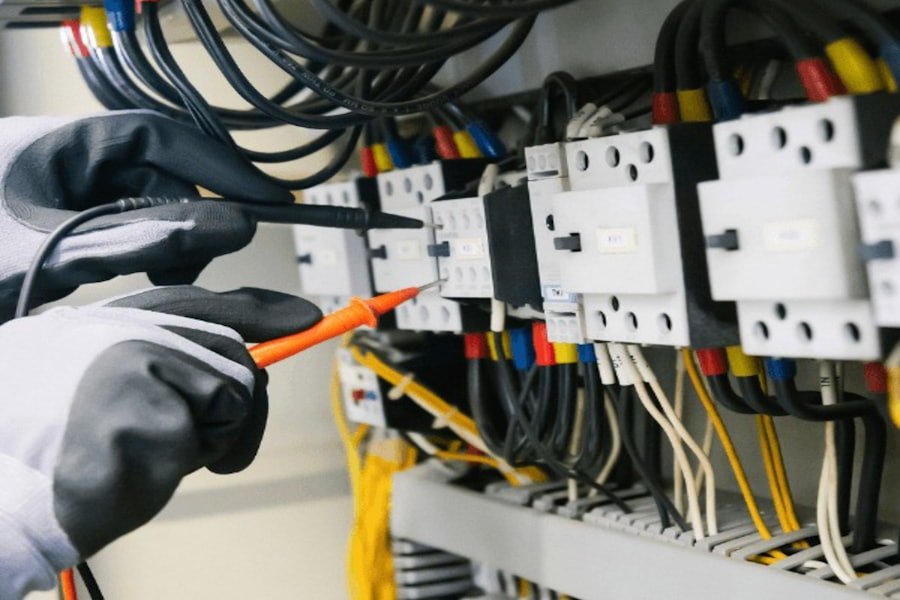
Electrical work in a community is either preventive or expensive. We staff it with licensed electricians who run scheduled inspection of panels, DG sets, pumps and common lighting, so faults are found during a Tuesday round rather than during a Saturday power cut.
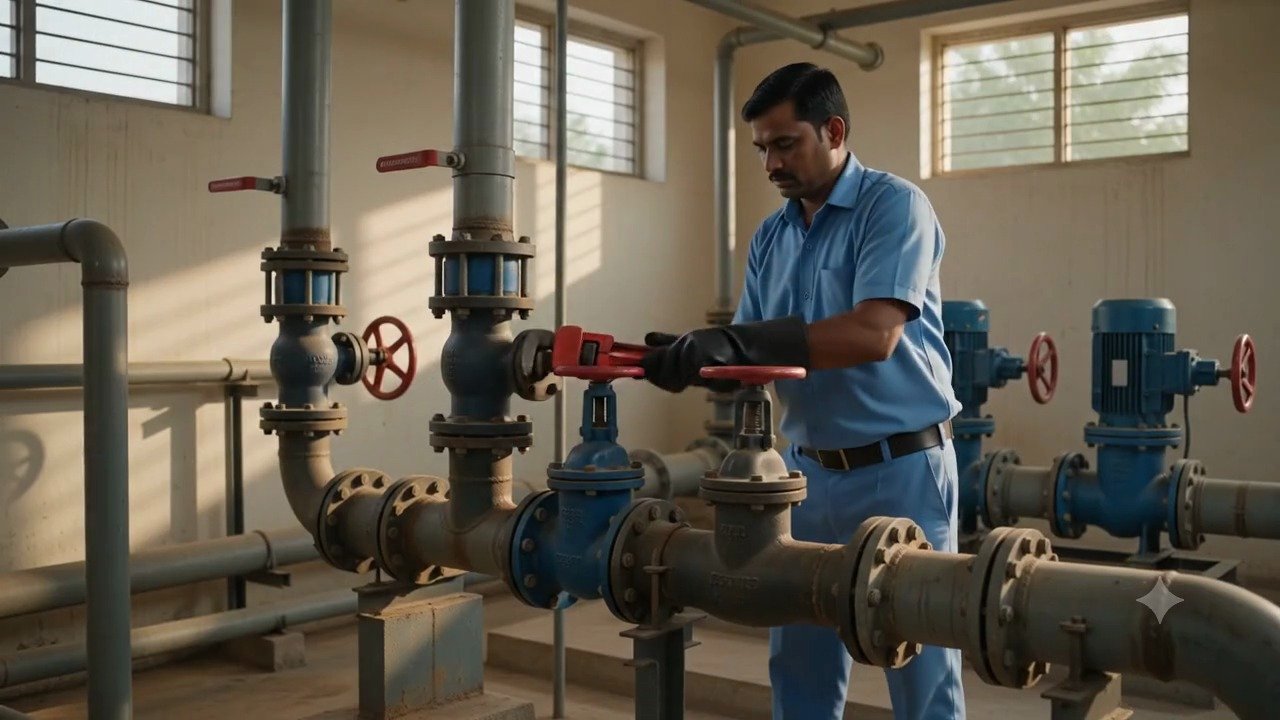
The common electrical system in a residential community carries more than most committees realise: incoming supply and metering, main and sub distribution panels, lift power, fire pumps and hydrant systems, water pumps, STP equipment, common and façade lighting, DG sets with their changeover, and increasingly EV charging load that was never in the original design. Each has its own inspection interval and its own way of failing.
Our preventive routine covers thermal condition of panels and terminations, tightness of connections, condition of contactors and relays, earthing integrity, DG battery, fuel, coolant and load-test behaviour, and pump insulation resistance. Loose terminations and heated joints cause a large share of community electrical failures and are entirely findable in advance — which is the argument for the round in the first place.
Breakdown response is defined rather than promised in the abstract. Electricians are on site during working hours and on call outside them, with an escalation route the association knows. For anything requiring an external agency — the distribution utility, the lift OEM, a transformer specialist — we coordinate the call, stay present during the work and confirm restoration rather than handing the association a phone number.
Statutory and safety boundaries are stated openly. High-voltage work, transformer intervention and anything requiring a licensed contractor of a specific class is carried out by an appropriately licensed agency, with our team coordinating and supervising. Lift maintenance remains with the OEM or the lift AMC contractor; we handle the power supply to it, the machine-room condition and the coordination when something goes wrong, which is where these two responsibilities usually meet.
How we run it
- 01
Asset register
Every panel, motor, DG and circuit is listed with rating and condition before maintenance begins.
- 02
Inspection calendar
Each asset class gets an interval. Rounds are recorded, so a skipped check is visible.
- 03
Defect log
Findings are logged with severity, so the association can plan spend rather than react to it.
- 04
Coordinated repair
Specialist and OEM work is arranged, supervised and closed out with confirmation of restoration.